What’s the Anion Gap in Metabolic Acidosis?
What the Anion Gap Assesses
The anion gap is a useful way to think about acid-base balance by weighing the main measured electrolytes in blood with the ions that are not routinely measured. In practice, it supports clinicians determine whether an electrolyte imbalance is being driven by extra acids in the blood, a loss of bicarbonate, or another form of metabolic derangement.
On a basic chemistry panel, the main values used are sodium, chloride, and bicarbonate. The gap represents the difference between the positively charged ions and the negatively charged ions that are measured. Because the body contains many unmeasured anions and other unmeasured ions, the number is not expected to be zero. Instead, it provides a diagnostic clue that helps clarify the etiology of metabolic acidosis.
In simple terms, the anion gap reflects the balance between measured cations and measured anions, plus the contribution of the body’s hidden acids. A rising gap suggests more acid is present in the blood, often from organic acids or toxins. A normal gap, by contrast, often points toward bicarbonate loss with replacement by chloride, which creates a different pattern called hyperchloremic acidosis.
Think of the anion gap as a shortcut in the workup of acid-base problems: it does not give the full answer, but it quickly points toward the right differential diagnosis.
Because the measurement is tied to serum electrolytes and overall anion concentration, the result should always be interpreted alongside other laboratory values, including pH and bicarbonate on a blood gas.
How to Calculate the Anion Gap
The typical gap calculation uses the main measurable ions on a serum chemistry panel. The standard formula is:
Anion gap = sodium - (chloride + bicarbonate)
The formula compares the dominant measured cation, sodium, against the main measured anions, chloride and bicarbonate. That difference reflects the amount of unmeasured anions in the blood.
An Anion Gap Calculator simplifies this math and reduces errors when reviewing multiple sets of lab values. This is especially useful in fast-paced settings, where quick clinical interpretation is needed to support an acid-base analysis.
Example:
- Sodium: 140
- Chloride: 102
- Bicarbonate: 24
With the formula, the anion gap is 140 - (102 + 24) = 14.
Normal ranges vary by laboratory, instrument, and whether potassium is included. Because of this, the most important step is to compare the result with the local normal range rather than relying on a single universal number. The calculator is a tool, but the interpretation depends on context, including whether the patient has systemic acidemia or a mixed disorder.
When using an Anion Gap Calculator, make sure the values come from the same sample and that the serum chemistry panel is clinically consistent with the blood gas. If chloride or bicarbonate is changing rapidly, a separate acid-base analysis may be needed to clarify the pattern.
Normal Anion Gap vs Increased Anion Gap Acidosis
This acid-base disorder is a condition characterized by a main reduction in bicarbonate, typically accompanied by a low pH on blood gas. The anion gap helps distinguish this into two major categories: normal anion gap metabolic acidosis and high-gap metabolic acidosis.
In high anion gap metabolic acidosis, additional acids accumulate in the body. Those acids separate and leave behind unmeasured anions, which raises the gap. This pattern is often a clue to lactic acid buildup, ketone production, kidney dysfunction, or toxin exposure.
In normal-gap metabolic acidosis, bicarbonate is lost and chloride rises to preserve electrical neutrality. The gap stays unchanged, but the patient still has acidosis. This is why a normal number does not exclude serious disease.
The contrast matters because the acid-base problem behind each pattern is different, and the etiologies, urgency, and next steps may differ as well. High-gap disorders usually point toward added acid, while normal-gap disorders usually point toward bicarbonate loss or impaired acid excretion.
A practical way to approach the result is:
- Confirm acidosis with blood gas and pH.
- Measure the anion gap on the serum chemistry panel.
- Assess whether the pattern is high gap or normal gap.
- Use the pattern to guide the cause-focused workup.
This systematic approach supports accurate result interpretation and helps identify the underlying metabolic derangement.
Common Causes of a Elevated Anion Gap
Various disorders can lead to high anion gap metabolic acidosis by increasing acid in the bloodstream. The main idea is that the added acid produces unmeasured anions that increase the gap.
Lactic acidosis is one of the most frequent causes. It occurs when lactate builds up during poor oxygen delivery, shock, severe infection, seizures, or other states of increased metabolic demand. In this setting, the blood gas may show acidic pH, and the chemistry panel often reveals a widened gap.
Ketoacidosis is another major cause. It can occur in diabetes, prolonged fasting, heavy alcohol use, or starvation. Ketone bodies act as the excess acids, and their anionic forms widen the gap. In a patient with elevated glucose or a history suggestive of insulin deficiency, ketoacidosis becomes a leading consideration.
Renal failure can also cause a high gap because the kidneys are unable to clear organic acids normally. As kidney function declines, retained acids accumulate, creating a widening gap and contributing to systemic acidemia.
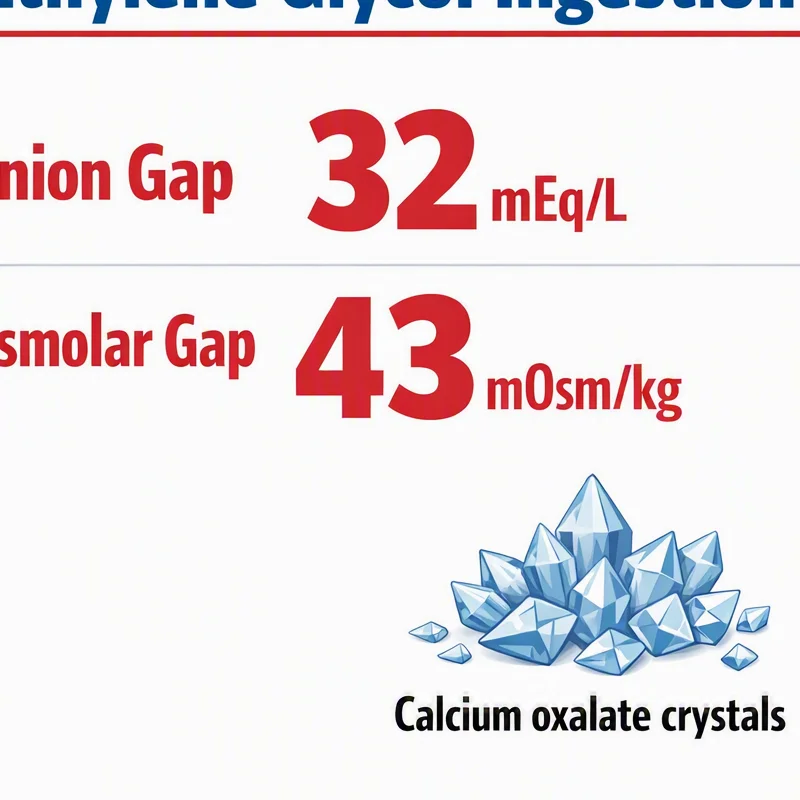
Toxic alcohols are critical not to miss. Ingestions such as methanol or ethylene glycol can cause severe high-gap acidosis. These toxins produce acidic metabolites and may also cause other striking clinical findings. In unexplained cases, toxic ingestion should remain on the differential diagnosis.
Other high-gap causes can include salicylate toxicity and certain inborn errors, but the most common practical categories remain lactic acidosis, ketoacidosis, renal failure, and toxic alcohols. The specific etiology often becomes clearer when the anion gap is interpreted with blood gas findings, glucose, ketones, kidney function, and clinical context.
Typical Causes of a Regular Anion Gap
A normal-gap metabolic acidosis typically indicates bicarbonate has been lost or chloride has risen to compensate. The result is a form of chloride-related acidosis, because the body retains electrical balance by elevating chloride as bicarbonate falls.
Gastrointestinal fluid loss is a classic cause. The gastrointestinal tract contains bicarbonate-rich fluid, and significant losses can lead to bicarbonate loss and metabolic acidosis. Because chloride rises to replace the missing bicarbonate, the anion gap often does not change much.
RTA is another important cause. In this group of disorders, the kidneys fail to excrete acid or conserve bicarbonate properly. The result is a normal-gap acidosis with acid retention or bicarbonate wasting, depending on the subtype.
Other situations can also lead to a normal gap, including certain medications, urinary losses, and iatrogenic chloride administration. However, the central pattern remains the same: bicarbonate drops, chloride rises, and the gap does not increase much.
Recognizing this distinction helps avoid overcalling a high-gap process. A patient may still be quite ill with normal-gap acidosis, especially if the bicarbonate is low and the pH is clearly acidic. The goal is to identify the mechanism, not just the numeric category.
How to Correct the Anion Gap for Albumin
Albumin is a major negatively charged serum protein and an essential contributor to the usual anion gap. Because it acts as an unmeasured anion, low albumin can make the measured gap appear apparently normal or only mildly elevated. That is why the corrected anion gap is often more useful than the raw value.
Hypoalbuminemia lowers the baseline gap. If albumin is reduced, the body has fewer negatively charged proteins contributing to the measured difference, and the lab result may miss the true burden of acids. This is especially relevant in critically ill patients, where low albumin is common.
The general idea of albumin correction is to adjust the anion gap upward when albumin is low. Different formulas exist, but the principle is the same: account for the missing negative charge so hidden acid accumulation is not overlooked.
Why this is important:
- A normal measured gap may hide a true high-gap disorder.
- The corrected value can better reflect the real acid burden.
- Clinical decisions are more precise when albumin is included in the interpretation.
In practice, the corrected anion gap is especially helpful when the serum chemistry panel and blood gas do not seem to line up. If the pH suggests significant acidemia but the gap looks only mildly elevated, albumin correction can reveal a more meaningful abnormality.
How to Interpret the Anion Gap in Real Cases
Practical assessment requires far more than learning by heart a formula. The anion gap should be reviewed together with the blood gas, the serum chemistry panel, and the overall presentation. A patient with a low bicarbonate and acidic pH has genuine acidosis, but the cause depends on whether the gap is increased or normal.
To begin with, confirm the presence of acidemia on blood gas. A low pH indicates systemic acidemia, but the entire acid-base disorder may still be mixed. For example, a patient can have a primary metabolic acidosis plus respiratory compensation, or a mixed disorder that partially offsets the pH.
Then, look at the gap and the albumin level. If albumin is low, calculate the corrected anion gap. A low albumin can conceal a high-gap process, so the corrected value strengthens the clinical interpretation.
Finally, connect the result to the likely cause. Elevated lactate suggests lactic acidosis; ketones suggest ketoacidosis; kidney dysfunction points toward renal failure; and exposure history raises concern for toxic alcohols. A normal gap with low bicarbonate makes diarrhea interpreting low anion gap or renal tubular acidosis more likely.
Take this practical example: a patient has low bicarbonate, an acidic pH, and an elevated gap on the chemistry panel. If albumin is also low, the corrected anion gap may be even higher, increasing the suspicion for hidden acids. In another case, a patient with severe diarrhea may have low bicarbonate and high chloride but a normal gap, which fits hyperchloremic acidosis.
In short, the anion gap is a valuable diagnostic clue, but it works best when combined with the full laboratory picture rather than used alone.
When to Use an Anion Gap Calculator
An anion gap calculator is valuable any time you want a quick, consistent way to support diagnostic workup for suspected acid-base problems. It is especially useful when the lab values are shifting or when multiple results need to be checked quickly.
Use a calculator if:
- You are reviewing an electrolyte panel and consider metabolic acidosis.
- You want to track serial serum electrolytes over time.
- You need fast acid-base analysis in a complex patient.
- You want to check whether albumin may be masking a high-gap disorder.
- You are narrowing the differential diagnosis for an unexplained low bicarbonate.
To get the best results, the calculator should be used with the current measured sodium, chloride, and bicarbonate values from the same sample. If there is a major shift in volume status, kidney function, or treatment, the result should be rechecked as part of ongoing clinical interpretation.
The calculator does not take the place of judgment. It supports the workup by translating raw numbers into a useful pattern, but the final answer still depends on the broader clinical context, including blood gas, history, exam, and other laboratory studies.
FAQs About the Anion Gap in Metabolic Acidosis
What is the anion gap in metabolic acidosis?
The anion gap is the gap between measured cations and measured anions, usually calculated from sodium, chloride, and bicarbonate. In metabolic acidosis, it helps show whether the acidosis is due to added acids, which raises the gap, or to bicarbonate loss with chloride replacement, which usually keeps the gap normal. It is a key tool in laboratory interpretation and acid-base analysis.
How do you calculate the anion gap from lab values?
Use the formula: sodium - (chloride + bicarbonate). Those values usually come from the serum chemistry panel. An anion gap calculator can do this in seconds and reduce math errors. After the number is calculated, compare it with the lab’s reference range and interpret it with the blood gas and clinical context.
What is a high anion gap signify?
A raised anion gap typically indicates there are excess acids in the blood that produce more unmeasured anions. Common causes include lactic acidosis, ketoacidosis, renal failure, and toxic alcohols. It is an important clue in the evaluation of high anion gap metabolic acidosis and should trigger a focused workup.
Why do you correct the anion gap for albumin?
You correct the anion gap for albumin because albumin is a primary unmeasured anion. If albumin is low, the measured gap may look less elevated than expected. A corrected anion gap helps uncover hidden acid accumulation, especially in patients with hypoalbuminemia or serious illness.
What can cause a normal anion gap metabolic acidosis?
Typical causes include diarrhea, renal tubular acidosis, and other forms of bicarbonate loss. This pattern is often called hyperchloremic acidosis because chloride rises as bicarbonate falls. A normal gap does not mean the acidosis is slight; it just means the cause is usually distinct from that seen in high-gap disorders.